Cat sounds
Cat sounds and what they can mean
Meows, purrs, chirps, and hisses: learn how to read common cat sounds alongside body language, everyday routines, and changes worth noticing.

THE SHORT ANSWER
Cat sounds can suggest a greeting, a request, excitement, or discomfort, but they do not have fixed word-for-word meanings. Listen to the sound, look at your cat’s posture, and notice what happened just before it.
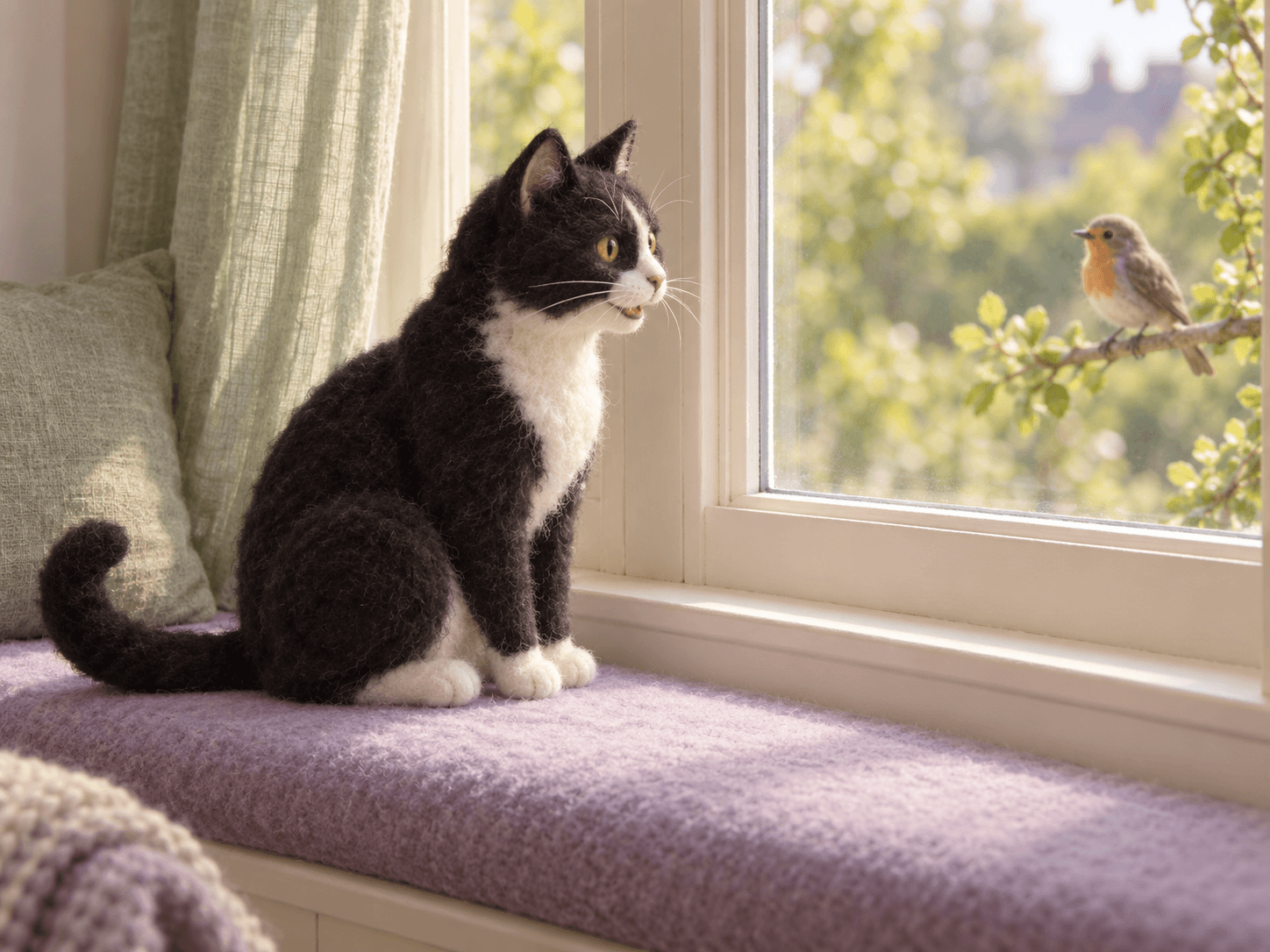
There is the tiny meow when you come home, the running commentary before dinner, and the surprising noise at the window. Learning your cat’s sounds starts with these ordinary moments. This guide helps you decide what to notice and how to respond, without turning every noise into a confident translation.
Start with the kind of sound you hear
A sound name is a useful description, not a diagnosis or a sentence. Cats Protection describes meowing as communication shaped partly by our responses. A particular meow can become familiar within one household without carrying the same meaning for every cat.
- Meow: a flexible call that may accompany a greeting or a request for food, attention, or access.
- Purr: a low rumble often heard during comfortable moments, but also possible during stress or pain.
- Chirrup or trill: a short, rolling sound you may hear when your cat approaches you.
- Chatter: quick clicks or broken little sounds, often while watching something outside.
- Hiss or growl: take these seriously and pause the interaction rather than pushing closer.
Check what the rest of your cat is doing
Before deciding that a sound means “happy” or “hungry,” look away from your phone and at your cat. Are they approaching, staying where they are, or moving away? Is their body loose or held tightly? What are their ears and tail doing?
A meow beside a closed bedroom door gives you different information from a meow while hiding under the bed. These are examples of context, not a decoding key. If sound and posture seem to disagree, avoid letting the sound overrule everything else you can see.
Look for your cat’s patterns, not an internet dictionary
Try keeping three short notes: where the sound happened, what came before it, and what your cat did next. For example: “Kitchen, before the usual dinner time; two meows; walked toward the food cupboard.” That description is more useful than writing “angry meow.”
Include moments when your first guess was wrong. If opening a door does not interest your cat, record that too. Over several ordinary days, you can compare actual situations instead of making a rule from one amusing clip. Keep your normal care routine; there is no need to delay meals or provoke a sound for an experiment.
Give a response your cat can accept or leave
A greeting does not have to lead to being picked up. You can say hello, pause, and let your cat decide whether to stay nearby. If they hiss during contact, stop reaching toward them. Cornell’s guidance notes that physical punishment can increase fear and worsen aggression.
For a sound you want to remember, capture a brief recording without following your cat around. Cat Translator offers a playful way to explore meows and save little exchanges. Keep the app’s interpretation separate from your own observations, especially when you are deciding whether your cat wants space.
Pay attention to a change in their usual voice
A sound chart cannot tell you whether a cat is unwell. VCA recommends a veterinary examination to investigate excessive vocalization and possible medical causes. Describe what is different from your cat’s normal behavior, rather than relying on a label such as “sad sound.”
If you have a recording, keep it alongside notes about timing and any other changes you noticed. Share those with your veterinarian. You do not need to identify the exact sound before asking for help.
Common questions
Can the pitch of a meow tell me exactly what my cat wants?
Pitch alone is not a reliable word-for-word guide. Compare the situation, your cat’s posture, and what usually happens around that sound.
Do quiet cats communicate less?
A quiet cat still gives you plenty to observe. Cats use body language, facial expressions, and scent as well as sound; a conversation does not have to include a meow.
Should I meow back at my cat?
You can respond softly if your cat seems comfortable, but do not assume you are saying something specific in cat language. A pause gives them room to approach or move away.
The most useful clue is the sound together with the cat, the place, and the moment.
Give that meow a little more attention.
Save a cat conversation and explore cat sounds with Cat Translator.