Life with cats
How to bond with a new cat, at their pace
Help a new cat feel at home with a quiet starting space, easy routines, gentle introductions, and small signs of growing trust.
THE SHORT ANSWER
Give a new cat a calm place to settle, keep daily care predictable, and let them approach you. Begin with quiet company, then offer brief play or contact when they are interested. Build the relationship around their choices rather than a deadline for cuddles.
You may have imagined your first evening together on the sofa. Your new cat may prefer the space behind a box. Leave room for a different beginning. A useful first goal is to learn what helps this particular cat feel comfortable enough to eat, explore, and rest.
Make their first room easy to navigate
The RSPCA recommends a separate starting room with food, water, a litter tray away from feeding areas, a sleeping place, and a scratching post. Include a hiding place, and set everything up before arrival.
Walk through the room yourself. Can you refill the water without reaching into their hiding place? Can you enter without crowding the bed? Put your own chair where you can sit without blocking an exit. These small layout decisions make everyday care easier to manage.
Bring what you know about them into the plan
The person or organization caring for your cat before you may already know a few useful preferences. Ask specific questions instead of only asking whether the cat is friendly. Write the answers somewhere everyone in the household can find them.
Use the answers to choose your first offers. If the cat liked watching a wand from inside a box, start there. If an answer is unknown, write "not sure yet" and learn it together.
- Which food and litter are they currently using?
- What toys have they chosen to play with?
- Where do they usually choose to rest?
- Is there handling they dislike or veterinary advice to follow?
Let quiet company count
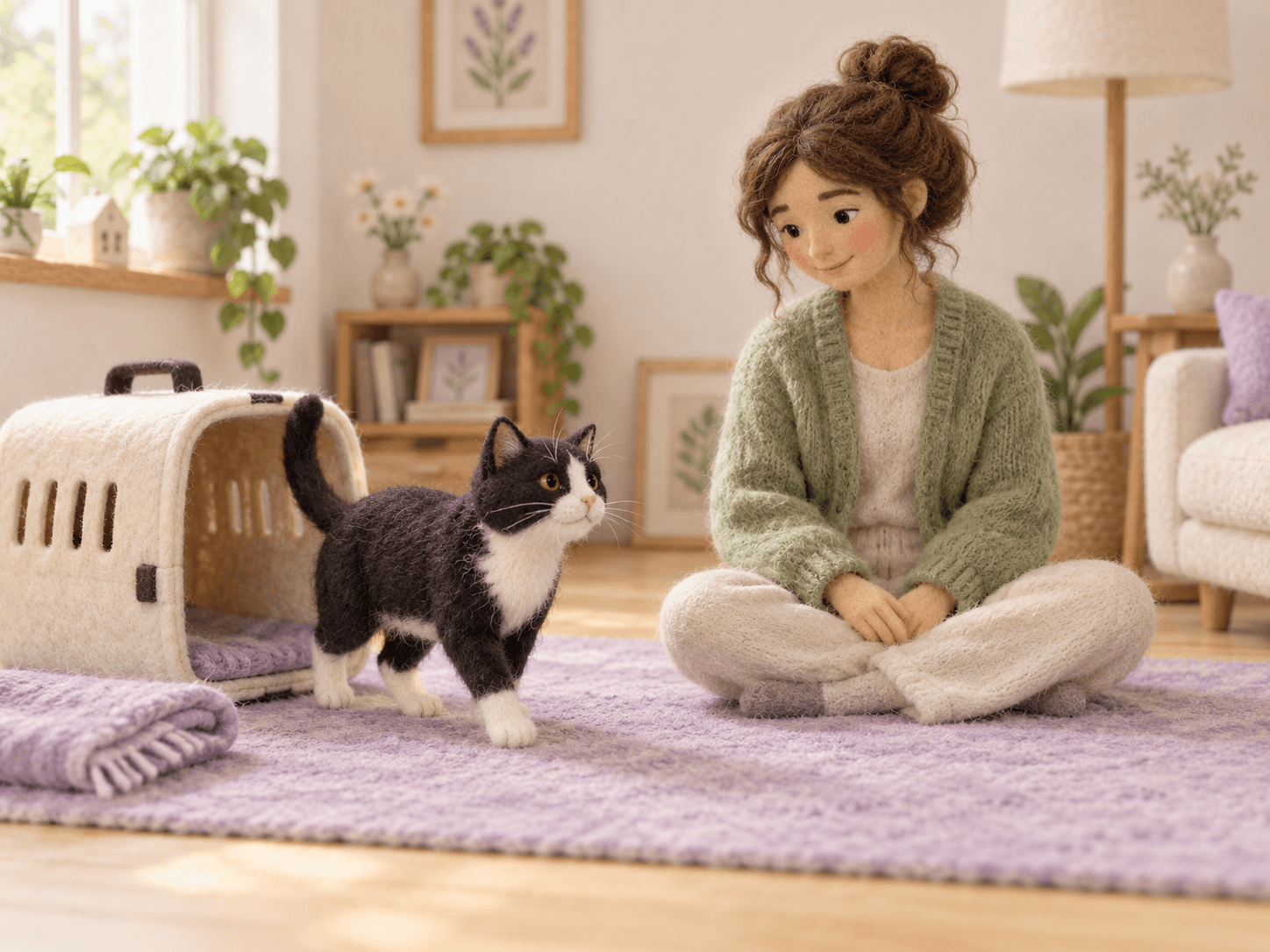
Bring a book into the room and sit without making your cat the focus of every movement. Keep visits manageable. One person could refill water in the morning and another could sit nearby after dinner.
If your cat approaches, resist turning that one step into several new experiences. A first sniff does not have to become a cuddle, a photo session, and an introduction to a visitor. Leave the moment small enough that your cat can choose what happens next.
Separate bonding from meeting everyone
Tell visitors the plan before they arrive. You might say, "We are keeping the first visits quiet, so please let her come to you." Agree on this with housemates, too, before an excited guest reaches toward the cat.
Other pets need their own gradual introduction process. The RSPCA recommends starting with scent exchange and physical separation before progressing to visual and supervised contact. Do not put two animals face to face because you want a welcoming photograph. Follow a dedicated introduction guide and get help if either animal struggles.
Track what changes, without keeping score
A brief note can help you remember the week accurately. Record food eaten, litter use, where your cat rested, and any time they chose to explore. Compare your notes with their own earlier days instead of somebody else's adoption video.
Cats Protection identifies eating well, exploring, and seeking company as possible signs of settling. Contact your vet with health concerns rather than assuming they are shyness. Once everyday care feels settled, add a small play invitation and see whether your cat joins.
Common questions
How long does it take to bond with a new cat?
There is no fixed deadline. Cats Protection explains that settling can take time and differs between cats. Watch for changes in your own cat rather than expecting a particular day to bring cuddles or confident exploring.
Should I take my new cat out of their hiding place?
Do not pull them out to make them socialize. Cats Protection recommends allowing a hiding cat time to adjust and offering quiet company. Keep essential care accessible and ask your vet or rehoming organization for help if you are worried.
Leave space for your cat to choose company, and make the next interaction as gentle as the first.
Give that meow a little more attention.
Save a cat conversation and explore cat sounds with Cat Translator.