Life with cats
How to talk to your cat and understand their reply
Learn how to talk to your cat with a calm voice, gentle slow blinks, and attention to the little signals they send back.

THE SHORT ANSWER
Talk to your cat quietly, leave a pause, and watch what they do next. Let them choose whether to approach. A relaxed conversation can include a glance, a slow blink, or simply sitting together; it does not need a meow in return.
You can tell your cat about your day without turning it into a training session. The useful part is paying attention between your sentences. Instead of trying to find one perfect phrase in cat language, make room for a small exchange that feels comfortable for both of you.
Start with a quiet hello
Cats Protection recommends a calm voice and letting a cat approach rather than forcing contact. Try a soft greeting when your cat is already awake nearby. Say their name once, then wait. There is no need to repeat it louder if they keep watching the window.
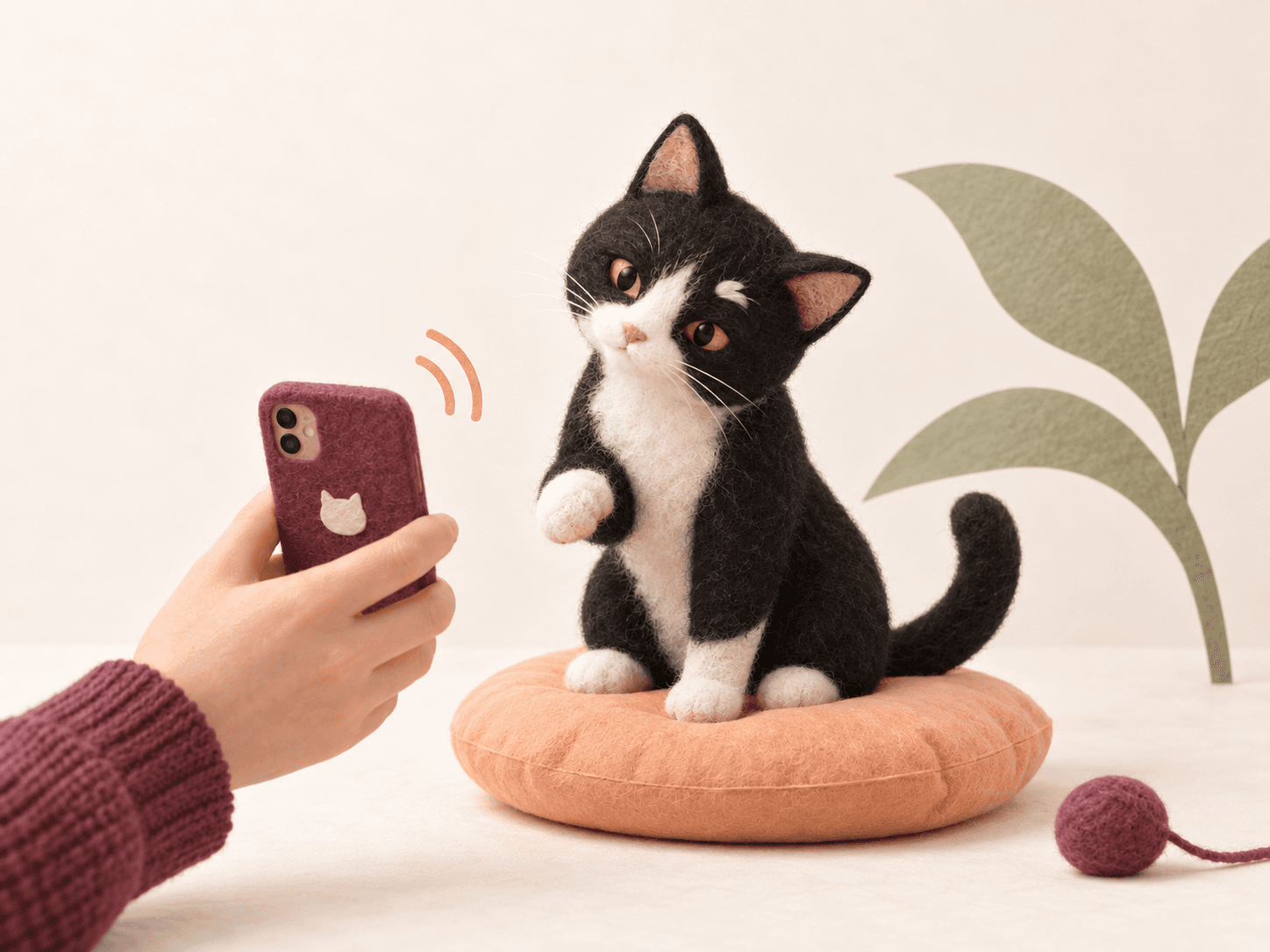
For a simple starting point, put your phone down while you say hello. Notice where your cat is looking before you speak and afterward. You are making time to notice them, not testing whether they can perform on cue.
Listen with your eyes, too
A meow is only one part of an interaction. Watch the whole cat and the situation around them. If they turn away or leave, let the conversation end. Avoid following them from room to room to get an answer.
Try describing what you actually see before deciding what it means. "She looked at me and walked to the door" is more useful than "She is annoyed with me." A few observations can help you spot familiar moments without treating every movement as a message with a fixed translation.
Try a gentle slow blink
University of Sussex researchers found that cats were more likely to narrow their eyes after a person slow-blinked at them. In a second experiment, cats were also more likely to approach a hand after a slow-blink interaction than a neutral expression.
When your cat is comfortable nearby, soften your gaze and slowly close and open your eyes. Then look away naturally. This is an invitation, not a challenge to hold eye contact. If nothing happens, leave it there. You do not need to repeat the exercise until your cat responds.
Give your everyday moments a familiar phrase
Pick a couple of phrases you enjoy saying, such as "Hello, sleepyhead" when you come home or "Ready for your toy?" before you take out a wand. Keep the moment simple enough that you can notice your cat instead of thinking about what to say next.
You could keep a tiny note for a week: the phrase, the time, and what happened. Maybe your evening hello gets a chirp, while the morning version gets a glance. Treat this as a record of your own cat, not proof that the words mean the same thing to every cat.
Keep cat sounds playful
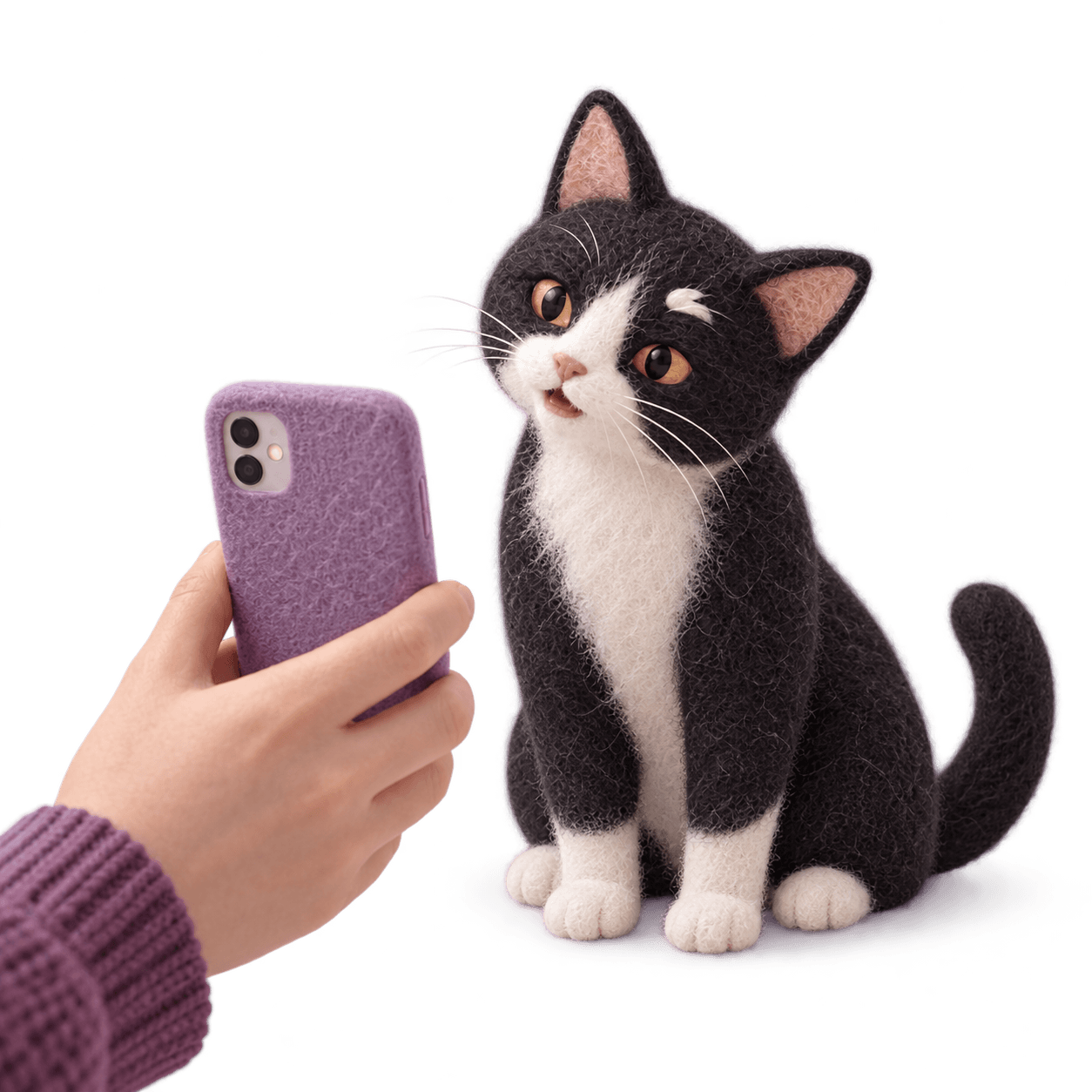
If you enjoy the idea of a back-and-forth exchange, Cat Translator lets you record a meow and explore a playful interpretation. You can also try a reply in cat sounds. Begin quietly, keep it brief, and stop if your cat moves away or seems uneasy.
Use the app as something fun to share, while looking to your cat's behavior for real guidance. A funny line on a screen cannot tell you what they need. Sometimes the best next move is to put the phone down and sit beside them.
Common questions
Should I meow back at my cat?
You can try a soft sound if your cat seems comfortable, but do not assume you are saying a particular word. Keep watching their response and stop if they withdraw. Your normal, gentle voice is a good place to start.
What if my cat never meows back?
You do not need a vocal reply to spend time together. Notice whether your cat chooses to stay nearby, approach, or continue resting. Let the interaction be quiet instead of trying to provoke a sound.
Say hello, leave a pause, and let your cat choose the next move.
Give that meow a little more attention.
Save a cat conversation and explore cat sounds with Cat Translator.